
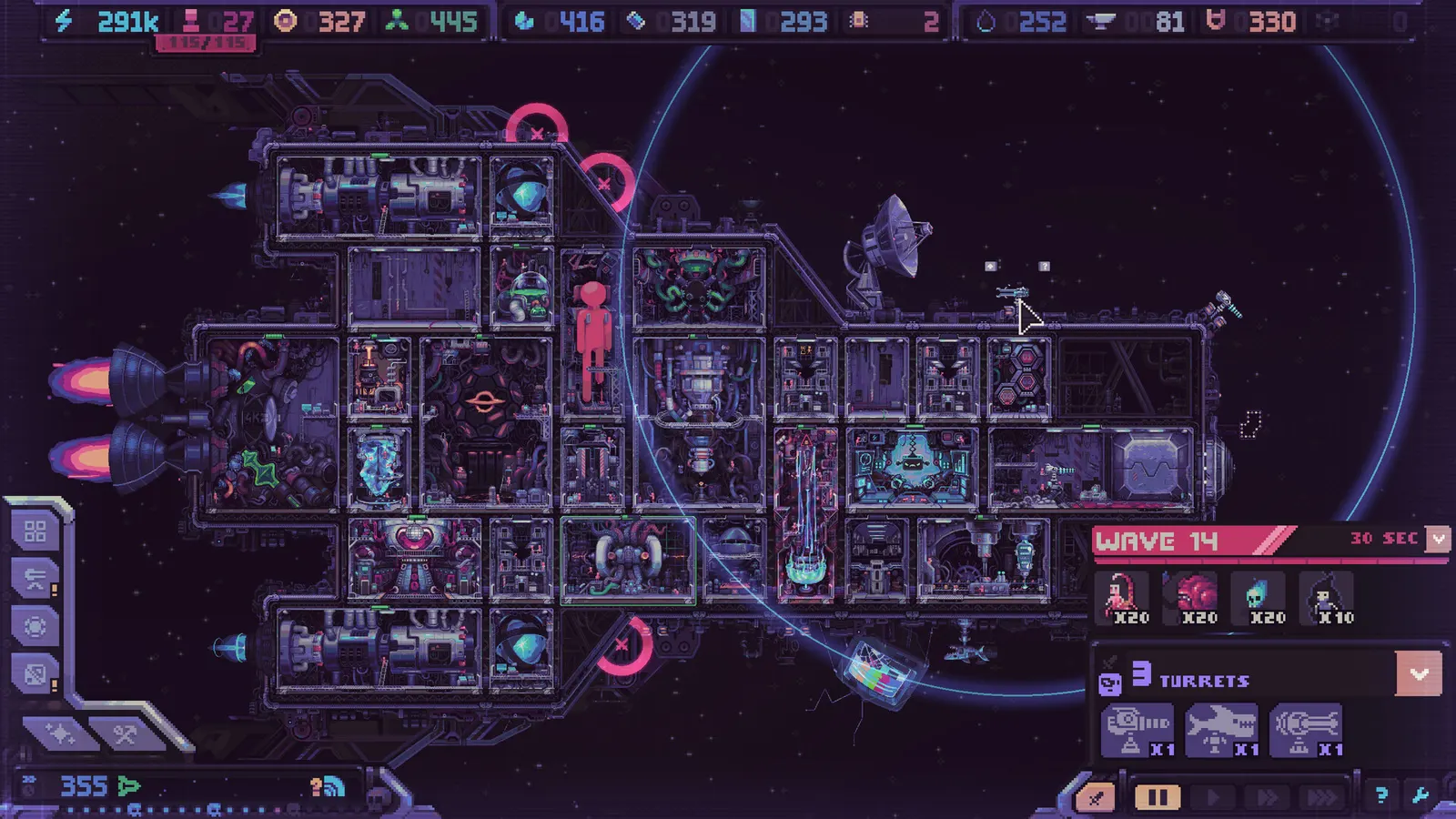
Hull Rupture has shipped three patches since its November 4 launch: 1.0.13 on November 5, 1.0.15 on November 7, and 1.0.16 on November 8. Only one of them changes how the game plays — 1.0.15 — and it changes two things that guides depend on.
The version number appears in the Steam client's download history for the game. If a guide's advice does not match what you are seeing, check that first.
1.0.16 — November 8
A single fix: starting a new run before finishing the current one would not generate a new galactic map. The run inherited the previous map instead.
Nothing else shipped in this build. If you start runs back to back, this is the patch you were waiting for.
1.0.15 — November 7
The substantial one. Three changes matter:
Difficulty unlocks are now shared across modes. Previously each mode kept its own ladder, so beating Normal in Classic opened Hard in Classic and left every other mode at the bottom. After 1.0.15, a difficulty unlocked anywhere is selectable everywhere. Achievements and mode unlocks behave as before; only the difficulty picker changed.
The wave 10 boss was nerfed. The developer's own description is worth quoting: if the game has ever told you that you lost on day 13, that was him. He now has less health and heals less, and the two waves before him — 8 and 9 — got slightly tougher in exchange.
Sprint Mode loadouts changed. Every starting ship used to begin with the same module set and no Meganewbie. Since 1.0.15 every loadout ships with a Meganewbie, and the loadouts differ from each other far more than they did.
A Conquest Mode economy bug was fixed. New turret kits in the inventory ignored their discount and cost full price until you built any turret at all — at which point prices dropped back. The bug made the first turret of a Conquest run more expensive than it looked.
The same patch also carried a batch of smaller fixes the notes describe as found by reading the code rather than by playing, which is the honest version of "we are not sure how visible these were".
Two further changes shipped quietly in the same build. Module kits in the post-combat shop during the first three waves now favour modules that produce Uncommon resources, which makes the opening build less dependent on luck. And the notes flagged a planned change to the Despot's Chamber: working there is meant to give an increased chance of an Uncommon resource module when the shop has not offered one, because the developer found players did not know the Chamber produces module kits at all.
If you read a guide written before November 7
Re-check two things: which difficulties you can select, and whether wave 10 is still described as a run-ender. Both changed in 1.0.15.
1.0.13 — November 5
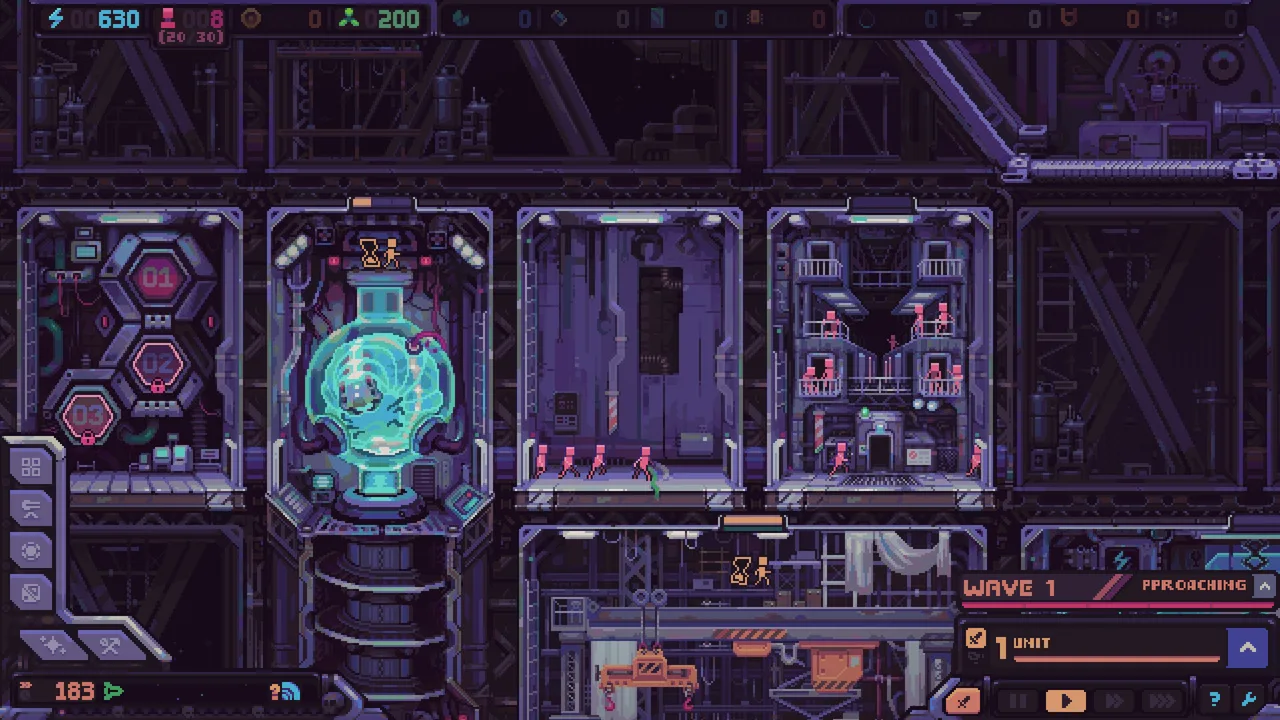
The day-after-launch patch. Artifact modules now display their upgrade information correctly, several minor bugs were fixed, and at least one soft-lock was removed.
The soft-lock is the part worth noting. It shipped inside the first 24 hours, which is normal for a management game with as many interacting systems as this one has.
 Official media · Steam
What the patches have not fixed
Late-run performance. Slowdowns past wave 40 were acknowledged during the demo period and traced to Endless Mode scaling, and the launch build split Endless into its own mode partly so it could be tuned separately.
None of the three launch-week patches touches it. The game still runs its worst when the ship is largest and the alien count is highest, which is exactly when a long Endless run needs it most.
The demo patches that set up launch
Two builds from the demo period explain choices the launch build inherited.
The September 25 demo patch added the rat turret and reworked kit randomisation, which is the change that made repeated module kits less common. It also carried the developer's answer to the loudest complaint of that month: getting the module you needed out of the shop was too random, and the fix was to weight the pool rather than to remove the randomness.
The same patch is where the wave 40 slowdown was first acknowledged. The developer's wording was that they had not expected players to get that far, and that Endless Mode balance had missed the mark again. The launch solution — separating Endless into its own mode with its own settings — follows directly from that admission.
Neither change is in the launch patch notes, because both shipped before launch. They are in this page because a player comparing the demo to the release will notice them and wonder when they happened.
 Official media · Steam
What the notes leave out
Patch notes describe what changed, not what is still wrong. Three things sit in the second category after launch week.
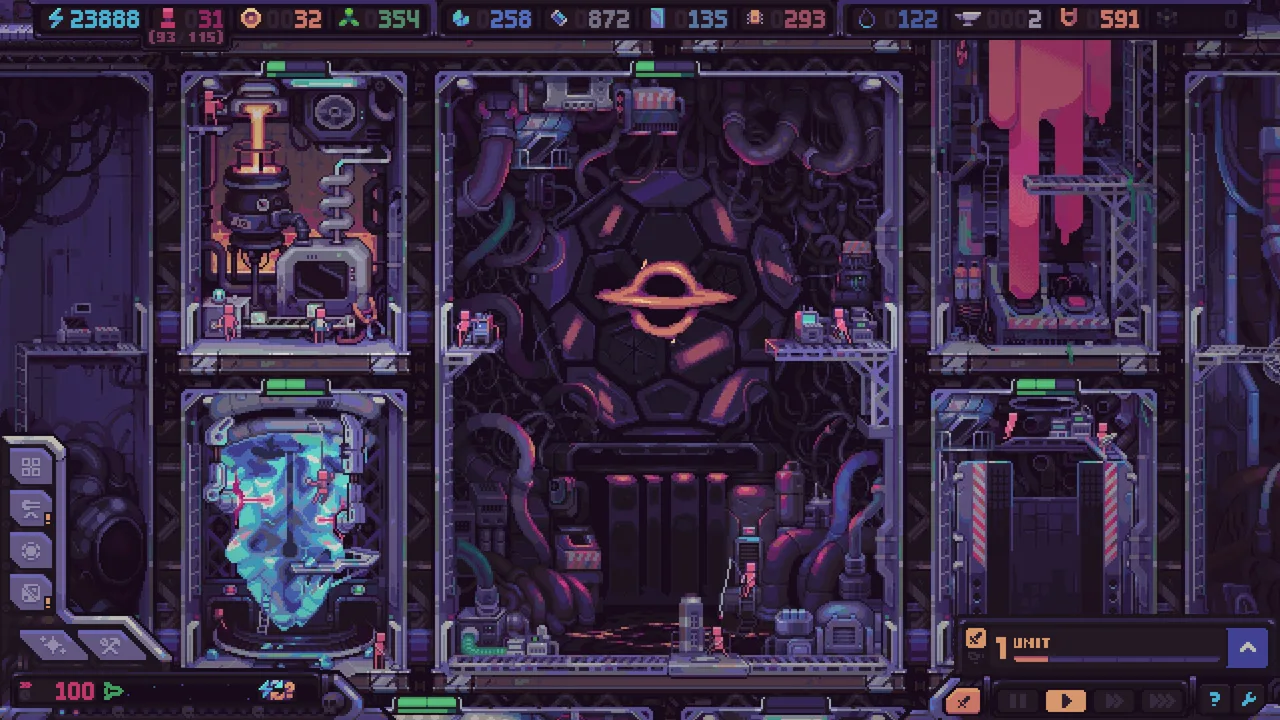
Late-run performance is one, and it is the largest. The interface at high module counts is another: build panels compete for space as a ship grows, and no patch has touched the layout. The third is balance outside the wave 10 boss — the notes nerf one fight and say nothing about the rest of the curve.
Reading the notes as a changelog is useful. Reading them as a health report is not, because the absence of a fix is not evidence that the problem is gone.
How to tell which build you are on
Steam does not put the version number on the store page. The reliable places are the game's properties window in your library, or the download history, which lists each build as it arrives.
If you are comparing notes with another player and the numbers do not line up — a boss that feels harder, a difficulty that is not where you expected it — the version is the first thing to check, before the build order.
What to expect next
The developer has not published a roadmap. What the notes show is a studio working through a punch list: a soft-lock, an economy bug, a map-generation state machine. That pattern usually continues for a week or two after a launch, and then shifts to content.
Guides on this site are dated for that reason. Anything that depends on a number — a discount end date, a difficulty unlock rule, a boss's damage — carries the date it was checked, so a reader can tell whether it predates a patch.